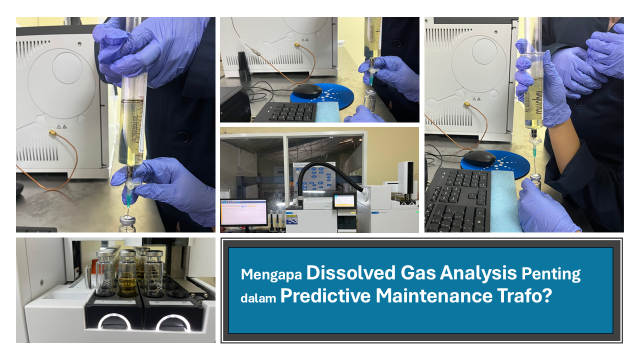
Dissolved Gas Analysis (DGA) of transformer oil is a key parameter in predictive maintenance due to its ability to "read" the internal conditions of the transformer without requiring dismantling or stopping operation. Here's a complete explanation:
1. Early Detection of Internal Faults
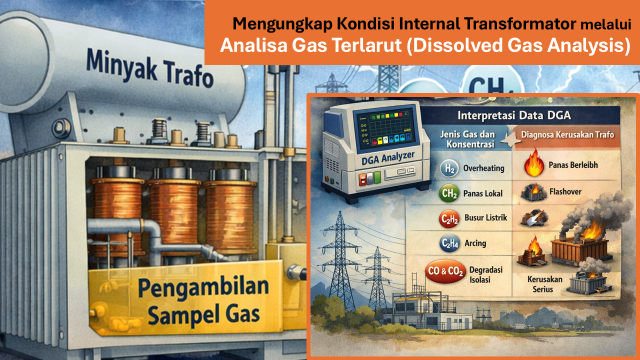
• Dissolved gases (H2, CH4, C2H2, C2H4, C2H6, CO, CO2) are formed due to the degradation of oil or solid insulation due to heat, excess current, or electrical discharge.
• Certain gas patterns indicate the type of fault:
- H2 → partial discharge
- C2H2 → arcing
- C2H4 → oil overheating
- CO & CO2 → degradation of insulating paper
• By conducting DGA analysis, faults can be detected long before they cause major damage.
2. Predicting Transformer Life and Reliability
• The CO/CO2 ratio is used to assess the degradation of insulating paper (cellulose aging).
• The trend in gas increases over time provides an indication of the rate of degradation, allowing for prediction of the transformer's lifespan.
3. Reducing the Risk of Sudden Failure
• Transformer failures typically result in very high costs (downtime, lost production, and even safety risks).
• Dissolved Gas Analysis helps identify problems before they become catastrophic failures, allowing timely preventive action.
4. Supporting Predictive Maintenance Strategies
• Dissolved Gas Analysis is not just a one-time inspection; it can also be used for trending analysis.
• By monitoring gas trends, engineers can determine when a transformer needs an overhaul, oil treatment, or simply intensive monitoring.
• This aligns with the concept of condition-based maintenance → maintenance is performed based on actual conditions, not just a routine schedule.
5. International Standards Support
• IEC 60599, IEEE C57.104, and the Duval Triangle are globally recognized interpretation methods.
• Provides a strong technical basis for decision-making, ensuring reliable analysis results.
Practical Application Examples
• Winding overheating: Dissolved Gas Analysis results show a significant increase in C2H4, indicating localized heat.
• Partial discharge: characterized by an increase in H2 and CH4, indicating a micro-electrical discharge.
• Arcing: appearance of C2H2 gas, indicating an arc, requiring immediate action.
Dissolved Gas Analysis is a "diagnostic window" for transformers. With dissolved gas analysis, engineers can:
• Detect internal faults early
• Estimate insulation life
• Avoid sudden failures
• Develop effective predictive maintenance strategies