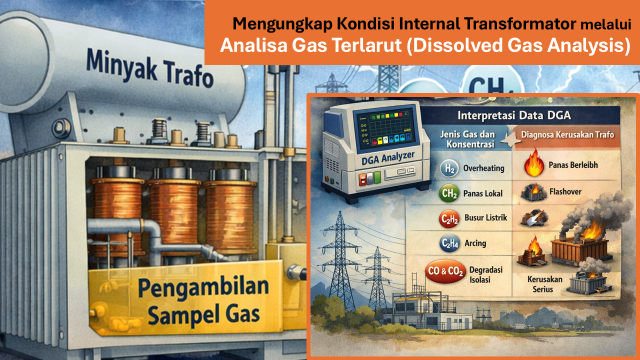
Power transformers are one of the most vital assets in an electrical system. Transformer failures not only impact the reliability of the electricity supply but can also cause significant financial losses. The challenge is that most transformer failures occur internally and are not visible from the outside. This is why Dissolved Gas Analysis (DGA) is a crucial diagnostic method.
By analyzing the gases dissolved in the insulating oil, the internal condition of the transformer can be scientifically and accurately "read"—even before a major failure occurs.
Why Can Gas Be a Damage Indicator?
Transformer oil functions as both an electrical insulator and a coolant. When internal failures occur, such as:
• Overheating
• Partial discharge
• Arcing
• Degradation of paper insulation
the oil and cellulose materials decompose, producing specific gases. These gases dissolve in the oil, and their composition reflects the type of failure.
The main gases analyzed include:
• Hydrogen (H2)
• Methane (CH4)
• Ethane (C2H6)
• Ethylene (C2H4)
• Acetylene (C2H2)
• Carbon monoxide (CO)
• Carbon dioxide (CO2)
Each gas has different diagnostic characteristics. Their combination and concentration form a "language" that describes the internal condition of the transformer.
How is Dissolved Gas Analysis Performed?
DGA testing is conducted in a laboratory using procedures that adhere to international standards such as:
• IEC 60567
• ASTM D3612
The stages include:
1. Oil Sampling
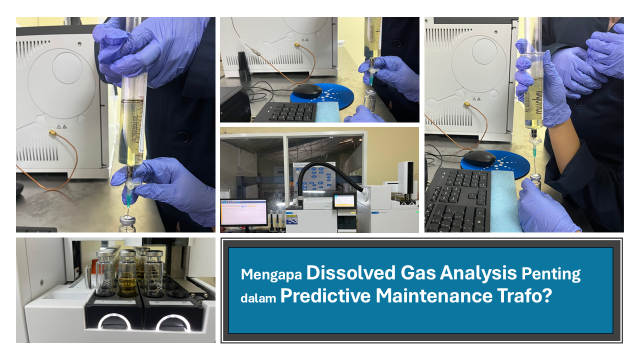
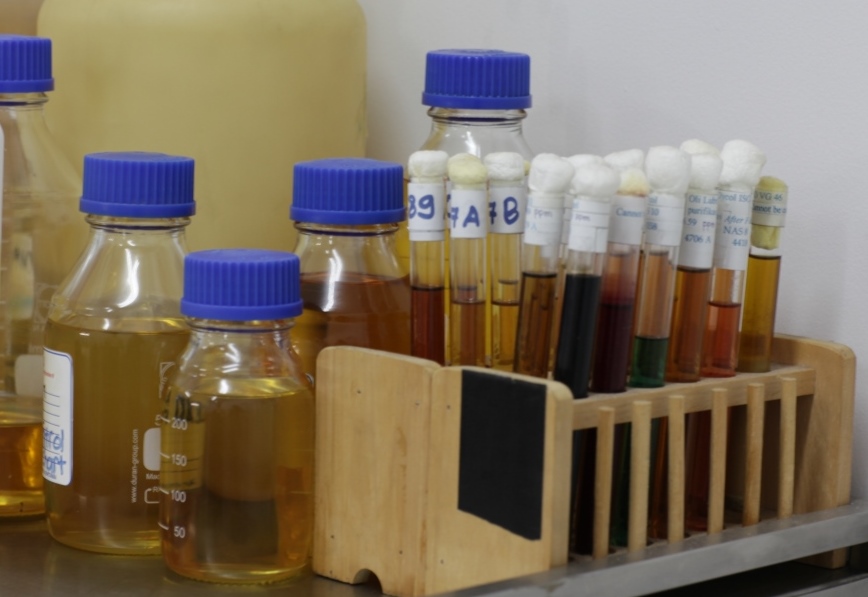
Samples are taken using special, airtight bottles to prevent contamination and loss of light gases such as hydrogen.
2. Gas Extraction
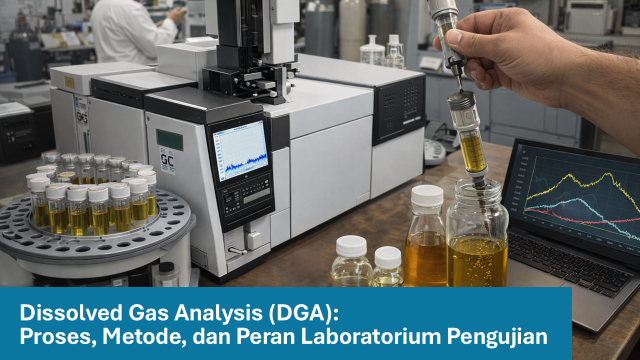
Gases dissolved in the oil are removed using specific methods such as vacuum extraction, headspace, or direct injection.
3. Analysis with Gas Chromatography
The separated gases are analyzed using Gas Chromatography (GC) to measure the concentration of each gas in parts per million (ppm).
4. Diagnostic Interpretation
The data obtained is then analyzed using guidelines such as IEC 60599 to determine the type of fault.
Identifying Fault Types from Gas Patterns
Here are some examples of interpreting internal transformer conditions:
Partial Discharge (PD)
• Increased hydrogen (H2)
• Small amounts of methane
Indicates mild electrical activity in the insulation.
Low Temperature Overheating
• Increased methane (CH4) and ethane (C2H6)
Indicates localized heating at medium temperatures.
High Temperature Overheating
• Significant increase in ethylene (C2H4)
Indicates high temperatures in conductors or connections.
Arcing
• The presence of acetylene (C2H2)
This indicates an electrical arc that has the potential for serious damage.
By reading this pattern, the laboratory can determine the severity of the disturbance and the urgency of action.
The Importance of Trending Data
Gas analysis looks not only at momentary values, but also at trends over time. A gradual increase in a particular gas can be an early warning signal before reaching an alarm level.
Example:
• Hydrogen levels consistently rising over several months
→ Indicates abnormal activity that requires further investigation.
A trend-based approach allows for a more proactive and planned maintenance strategy.
Strategic Benefits of Dissolved Gas Analysis
Routine implementation of Dissolved Gas Analysis (DGA) provides various benefits:
- Early detection of internal damage
- Prevention of sudden failures
- Timely maintenance planning
- Savings on asset replacement costs
- Extension of transformer operational life
In modern power systems, DGA is even part of asset condition monitoring and predictive maintenance programs.
The Role of Laboratories in Ensuring Reliability
Testing laboratories play a crucial role in ensuring accurate and reliable analysis results. Laboratory competencies include:
• Calibrated Gas Chromatography Equipment
• Standardized Testing Methods
• Accredited Quality Systems
• Experienced Analysts
• Diagnostic Interpretation Capability
A competent laboratory not only presents numerical data but also provides technical recommendations that aid decision-making.
Dissolved Gas Analysis (DGA) is an effective scientific method for revealing the internal condition of a transformer without the need to open or disassemble the equipment. By identifying gas patterns produced by insulation degradation, DGA can detect faults at an early stage and prevent major failures.
With regular testing and proper interpretation, transformers can operate more safely, reliably, and efficiently. In the modern electricity world, DGA is no longer just an option—it is a strategic necessity for maintaining power system sustainability.